
Why Your Bank Balance is Lying to You: The Small Business Guide to Bank Reconciliation
If you’ve ever looked at your banking app on a Tuesday morning and wondered why you have less money than your spreadsheet says you should, you aren’t alone. For many UK entrepreneurs, the bank balance is the only "report" they check—but it’s rarely the full story.

As a family-run bookkeeping team, we see this every day. You might have outstanding cheques, pending card payments, or bank fees you haven't accounted for. This is where Bank Reconciliation comes in. It sounds like a technical accounting term, but it’s actually a simple, vital habit that keeps your business healthy.
In this guide, we’ll explain how to match your "real world" money with your "bookkeeping" money without the headache.
What is Bank Reconciliation?
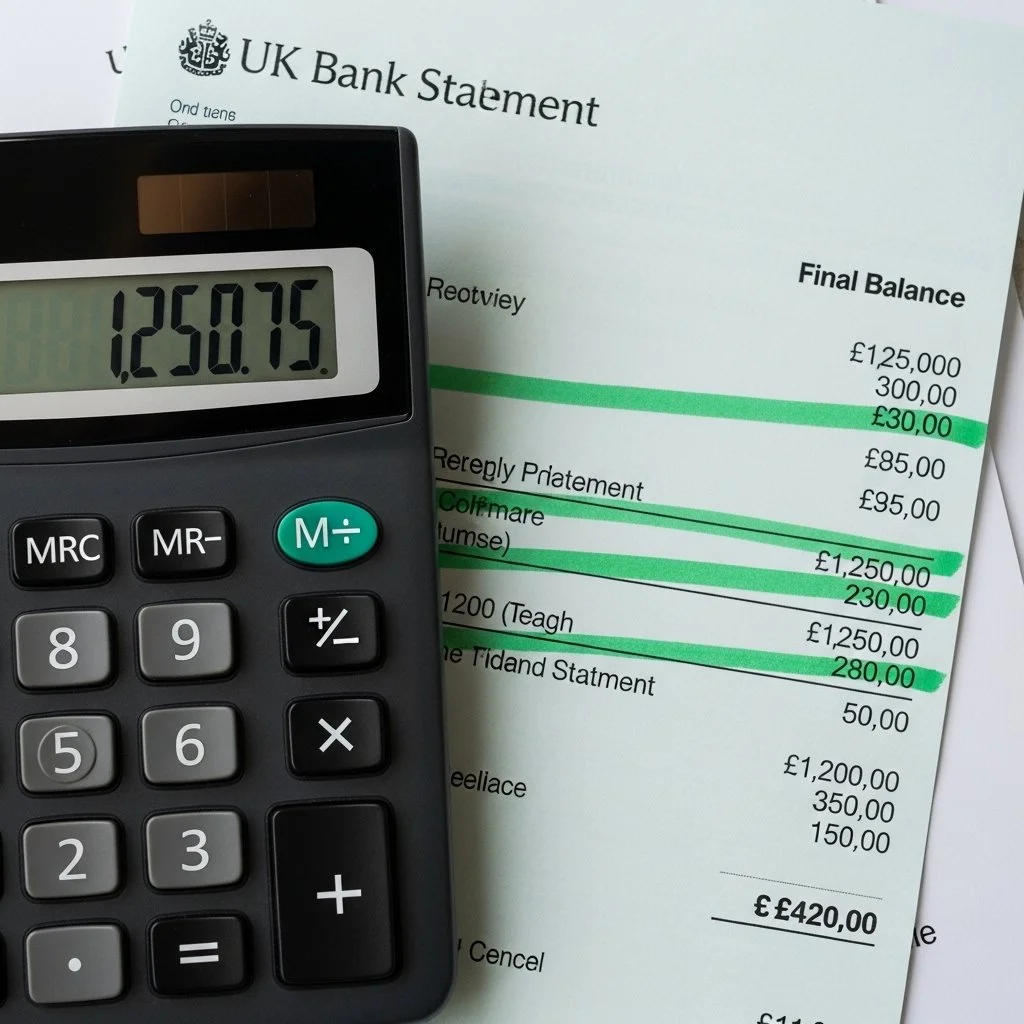
In simple terms, bank reconciliation is the process of cross-checking your bank statement against your own business records (like your invoices and receipts).
Think of it like checking your receipt after a big supermarket shop. You’re making sure that every penny that left your account matches a "reason" in your books. When the two sets of numbers match perfectly, your books are "reconciled."
3 Common Mistakes Businesses Make with Their Banking
Even with modern banking apps, it is easy for errors to creep in. Here are three mistakes that often lead to messy year-end accounts:
1. Duplicating Transactions Sometimes, a glitch in a software "feed" or a double-click on a manual entry can lead to an expense being recorded twice. If you don't reconcile, you might be claiming for the same laptop or utility bill twice, which is a major red flag for HMRC.
2. Forgetting "Hidden" Bank Fees Small charges like monthly account fees, international transaction fees, or interest charges often don't have a "receipt." If you don't check your statement against your books, these tiny leaks can add up to hundreds of pounds of unrecorded expenses by the end of the year.
3. Ignoring "Old" Unpaid Invoices If you don't reconcile your bank, you might think a customer has paid you when they actually haven't. Or worse, you might chase a customer for a payment they made weeks ago because you didn't "match" the money to the invoice in your system. This can really damage your professional reputation!
4 Practical Tips to Reconcile Like a Pro
You don’t need to be a math whiz to get your banking in order. Start applying these tips today:
1. Use a Dedicated Business Account This is the golden rule. Never, ever mix your personal grocery shopping with your business's software subscriptions. Having a clean "business-only" statement makes reconciliation 90% faster.
2. Embrace "Bank Feeds" If you use software like Xero or QuickBooks, set up a "Bank Feed." This automatically pulls your transactions into your bookkeeping software every morning. Instead of typing in numbers, you just have to "OK" the matches the software suggests.
3. The "Friday 15" Rule Don't wait for your accountant to ask for files at the end of the quarter. Spend 15 minutes every Friday afternoon reconciling your transactions from that week. It’s much easier to remember what a £14.99 "AMZNMKT" charge was on Friday than it is three months later!
4. Check Your "Ending Balance" At the end of every month, check that the "Statement Balance" in your software matches the "Actual Balance" on your banking app. If they don't match, you know exactly which month the error happened in, making it much easier to find.

How a Professional Bookkeeper Makes a Difference
At Griffiths Small Business Solutions, we don't just "do the books"—we give you peace of mind. While you are busy serving your customers, we are in the background making sure every single penny is accounted for.
We help by:
Spotting Errors Early: We catch duplicate payments or missing entries before they become big problems.
Cleaning Up the "Clutter": If your bank feed is messy or disconnected, we get it back on track.
Cash Flow Clarity: Because we reconcile regularly, we can tell you exactly how much "real" money you have available for taxes or investment.
Saving You from "The Shoebox": We match your digital receipts to your bank transactions so your records are 100% HMRC-compliant.
Conclusion: Clean Books, Clear Mind
Bank reconciliation isn't just about satisfying the taxman; it’s about knowing exactly where your business stands. When your bank matches your books, you can make decisions with confidence, knowing that your "profit" isn't just a guess.
Ready to Stop Guessing Your Numbers?
Is your bank balance a mystery? Let’s get your finances streamlined. We help UK small businesses move from "financial fog" to total clarity with our professional, family-run bookkeeping services.
Contact us today to find out how we can take the stress out of your bank reconciliation!
